
Plan demand before choosing capacity
Start with the number of punnets or trays required per week, crop mix and harvest days. Capacity should follow real menu, retail or customer demand rather than the maximum number of shelves available.
Commercial microgreens production becomes easier to manage when demand, sowing, germination, grow-out, harvest and sanitation are planned as one operating cycle.
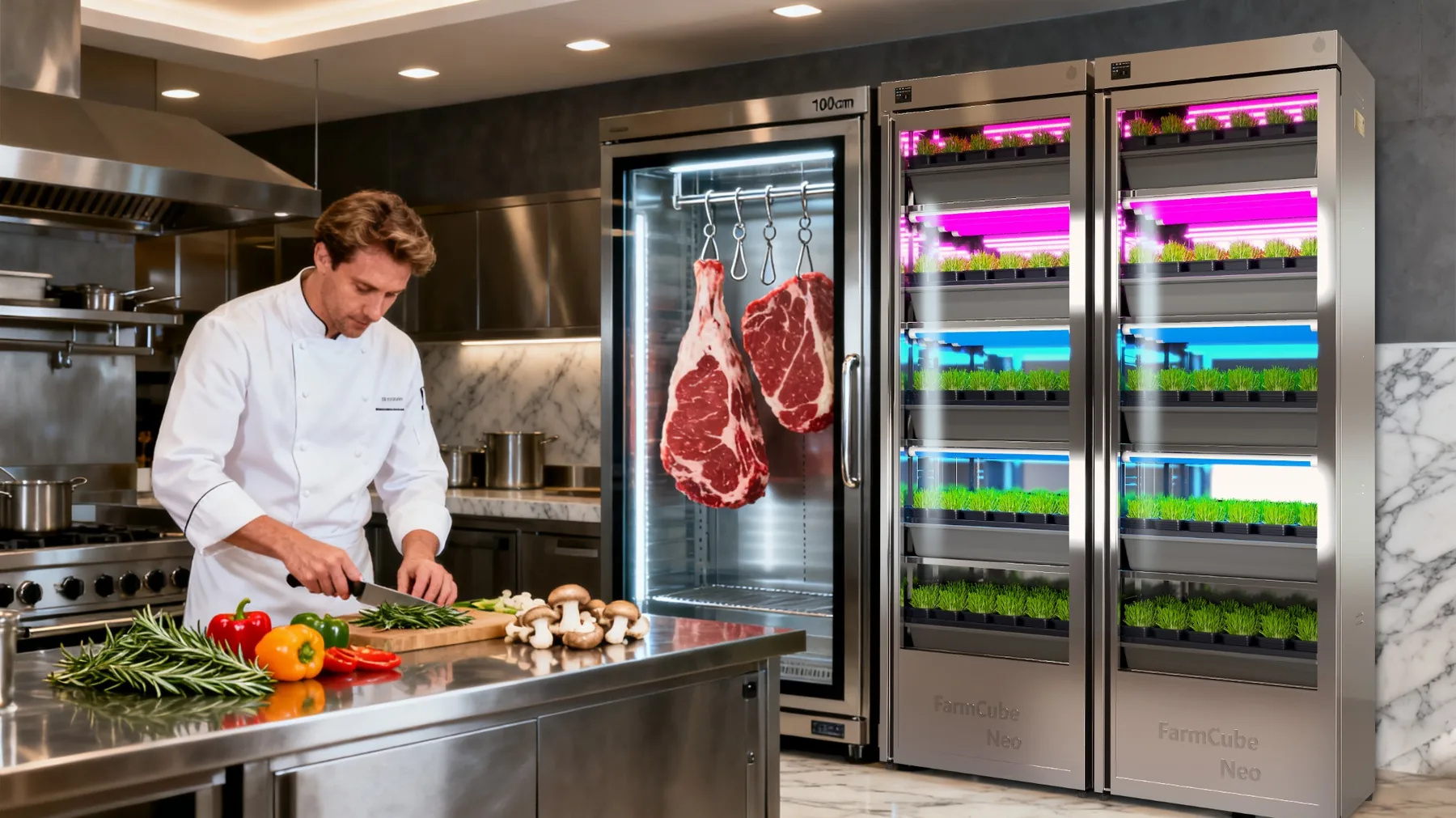
Start with the number of punnets or trays required per week, crop mix and harvest days. Capacity should follow real menu, retail or customer demand rather than the maximum number of shelves available.
Many microgreens workflows include a dark or germination stage before crops move under lights. Time in each stage affects how many batches can be in process at the same time and therefore affects true capacity.
Staggered sowing can create a more regular harvest flow and reduce the risk of one large batch maturing at once. The correct interval depends on crop, temperature, light, target harvest stage and actual demand.
Tray cleaning, seed handling, water quality, tool hygiene and crop inspection should be built into the routine. High-density short-cycle crops can magnify small operating inconsistencies.
For restaurants, hotels and retail, the system should fit service access, replenishment, cleaning and harvest workflow. A compact cabinet can shorten the distance between production and use, while routine determines consistency.
Share the crop, location, available space, utilities, output target and timeline for a focused system review.