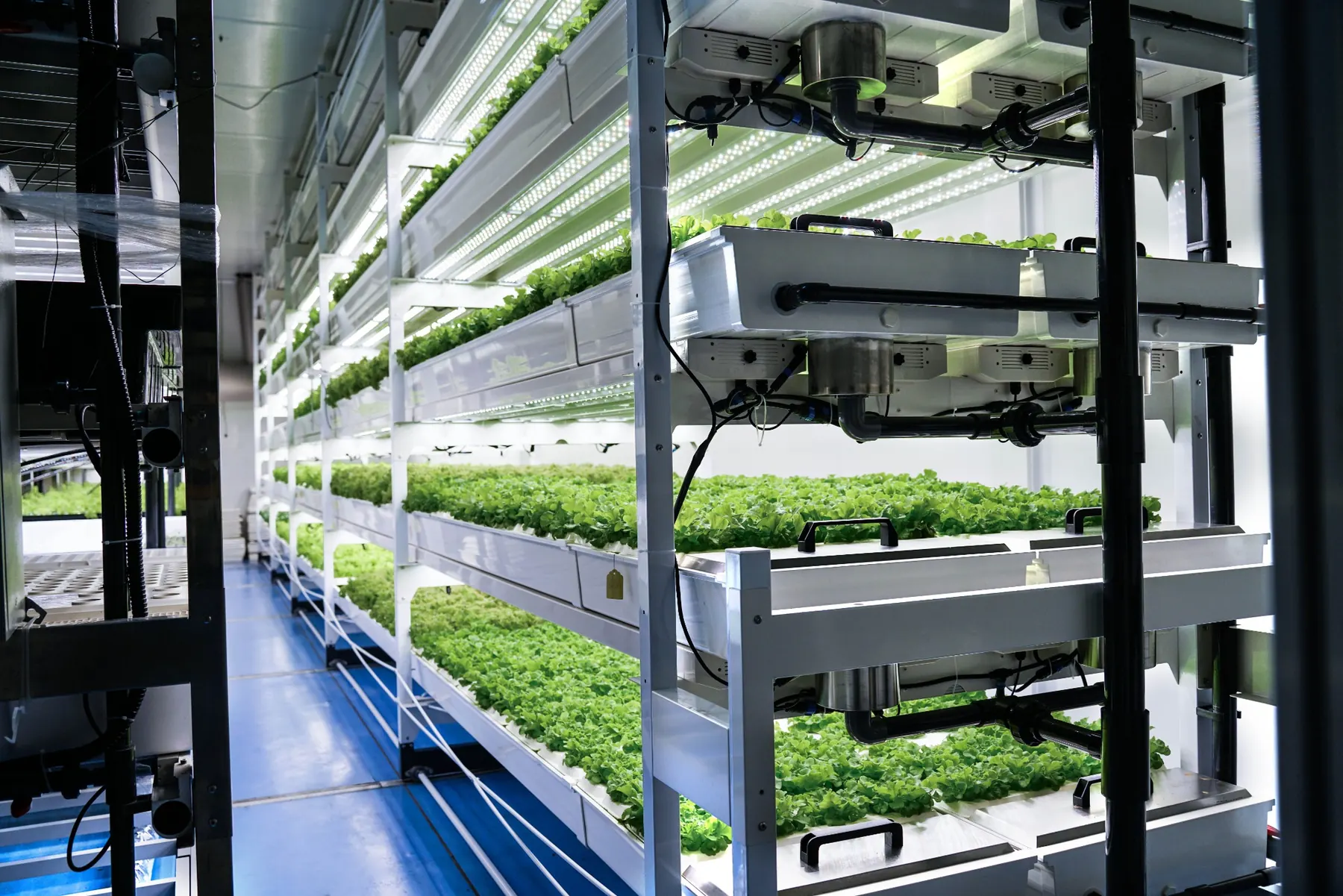
01Define crop and market first
Crop, cultivar, harvest stage, packaging format, selling price and customer requirements shape nearly every downstream engineering decision. A farm built before these questions are clear can be difficult to operate efficiently.
02Translate sales demand into production flow
Work backward from weekly or monthly saleable output. Include propagation, transplanting, crop cycle, harvest, cleaning, losses and planned downtime to estimate planting sites, growing area and batch frequency.
03Confirm site and utilities early
Electrical service, water quality, drainage, ambient climate, ceiling height, loading access and equipment space can change the system layout. Check them before final equipment selection.
04Design climate and crop systems together
Lighting, density, irrigation, transpiration, airflow, HVAC and dehumidification affect each other. Treat them as one controlled-environment system rather than separate purchases.
05Build the operating model before procurement
Staffing, maintenance, nutrient use, cleaning, spare parts, electricity and logistics should be modelled alongside CAPEX. Technical feasibility still needs a realistic operating plan and market route.