
Restaurant
Plan microgreens and culinary herbs around regular menu use and expected covers.
Plan fresh herbs and microgreens as a hotel operating system: connect outlet demand, guest-facing placement, crop cycles and daily staff responsibility before choosing the cabinet location.
 HOSPITALITY PLANNINGOutlet DemandGuest ExperienceStaff Workflow
A hotel may have breakfast service, an all-day restaurant, lounge, bar, banquet kitchen or chef table. Treat their crop demand as one combined production plan.
Plan microgreens and culinary herbs around regular menu use and expected covers.
Use small, repeatable harvests for buffet presentation, garnish and premium guest service.
Schedule aromatic herbs according to beverage programmes rather than relying on surplus restaurant production.
Treat event demand separately because large one-day requirements can disrupt an otherwise stable crop schedule.
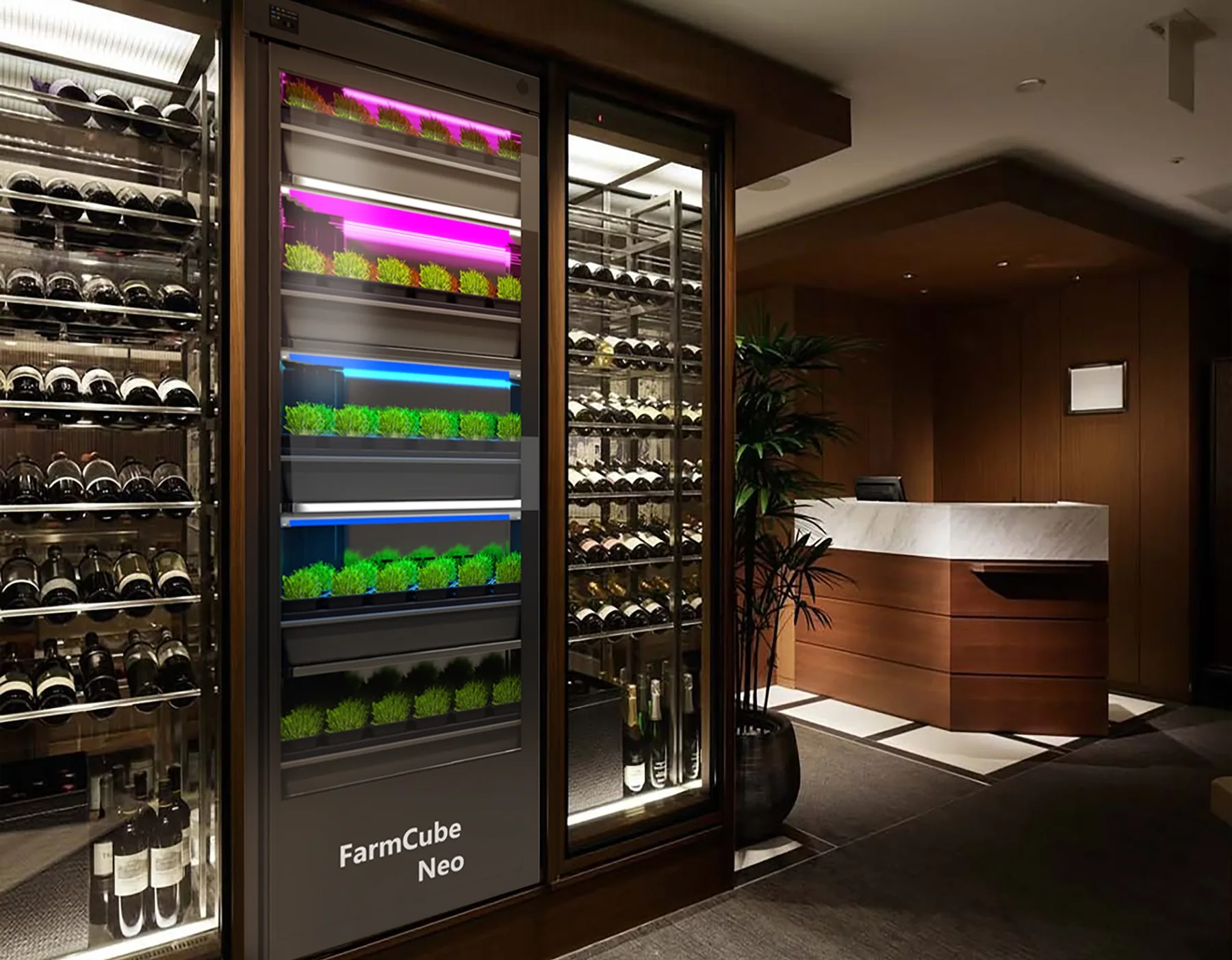
Guest-facing growing can strengthen the food story, but the cabinet still needs practical access for loading, harvest, sanitation and utilities.
High visibility can work when staff can access the unit without crossing guest circulation during service.
Close proximity to preparation makes harvesting practical and connects growing directly with food production.
A cabinet can operate as a visible fresh-food feature when cleaning and maintenance remain discreet and accessible.
Some hotels may prefer production close to the kitchen with only part of the crop programme visible to guests.
FarmCube Neo supports microgreens and culinary herbs. Reference crop data on the technical dossier includes pea, radish, basil, cabbage and carrot, while other supported crops include cilantro, parsley, arugula, kale and broccoli.
Reference cycles are planning values from the FarmCube Neo crop table. Final recipes should be validated for seed variety, desired harvest stage and the hotel’s operating environment.
Hotel projects work best when culinary, engineering and food-safety responsibilities are clear before the system is installed.
Defines crop demand, harvest standard and menu timing.
Loads batches, checks crop condition and follows the cleaning schedule.
Confirms electrical supply, water, drainage and service access.
Defines handling, sanitation, storage and local compliance procedures.
Start by mapping which outlets will use the crops, how much each outlet needs each week, where harvesting will happen, and which team will operate and clean the system.
It can support multiple outlets when total demand fits the selected model capacity and crop schedule. Neo-2T holds 24 punnets per cycle and Neo-5T holds 60, so the operating plan should combine outlet demand before model selection.
Yes. FarmCube Neo is designed as an enclosed cabinet for hospitality and premium retail environments, but placement should still maintain service access, cleaning space, safe circulation and the required utilities.
Review the FarmCube Neo technical dossier or share the hotel outlets, expected crop use and proposed installation area for project planning.