
Fresh-food production
Use scheduled batches to supply prepared-food counters, in-store dining or small retail packs.
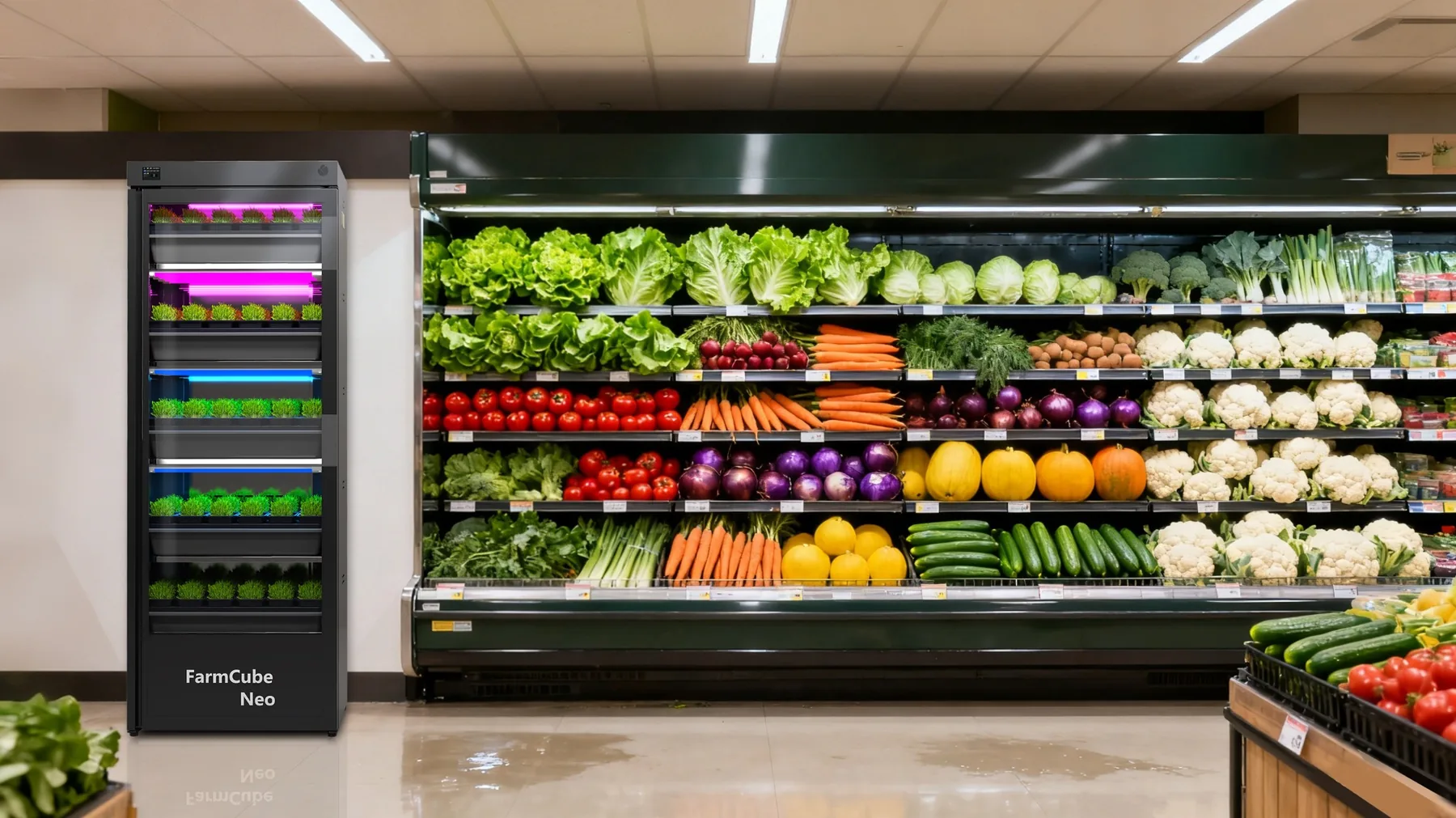
Combine visible growing with a practical retail operating plan: crop turnover, staff handling, placement, sanitation and the relationship between the cabinet and the fresh-food offer.
 RETAIL PLANNINGCrop TurnoverFresh ProduceCustomer Visibility
Retail projects become easier to operate when the business defines what the cabinet must contribute beyond visual interest.
Use scheduled batches to supply prepared-food counters, in-store dining or small retail packs.
Place live crops close to fresh produce or foodservice areas to make the growing process visible.
Use the cabinet to explain crop varieties, harvest timing and on-site production without creating an exposed grow room.
A repeatable cabinet format can simplify rollout when the same crop programme is planned across several premium retail locations.
High visibility only works when loading, harvesting, cleaning and utilities can be managed without disrupting shoppers or food handling.
Position the cabinet near premium fresh produce where live growing supports the category story.
Connect crop harvest with salads, sandwiches, bowls or chef-led counters that can use microgreens directly.
Use an enclosed cabinet in a shared hospitality setting where appearance and customer circulation are important.
Smaller formats can work in gourmet stores or premium concepts where crop volume is modest but visibility matters.
FarmCube Neo supports microgreens and culinary herbs. Fast-cycle crops can support frequent turnover, while longer-cycle herbs should be scheduled separately.
Reference cycles are planning values from the FarmCube Neo crop table. Final recipes should be validated for seed variety, harvest stage and the retail operating environment.
Visible growing still depends on disciplined back-of-house procedures.
Prepare punnets and batches according to the weekly crop plan.
Check crop condition, reservoir status and cleanliness during routine store operations.
Move crops into prepared-food or retail handling according to the defined food-safety procedure.
Clean trays, crop-contact surfaces and the cabinet according to the documented schedule before reload.
It can combine small-batch crop production with a visible fresh-food feature near produce, food halls or prepared-food areas. The operating plan should still prioritize crop handling, sanitation, utilities and customer circulation.
Neo-2T provides 24 punnets per cycle for compact placements, while Neo-5T provides 60 punnets per cycle for higher-volume or stronger visual presence. Selection should follow expected crop turnover and available floor space.
Confirm electrical supply, water and drainage routing, staff access, sanitation procedures, customer clearance, crop loading workflow and the relationship between the cabinet and the fresh-food display.
Review the FarmCube Neo technical dossier or share the store layout, crop use and expected weekly turnover for project planning.