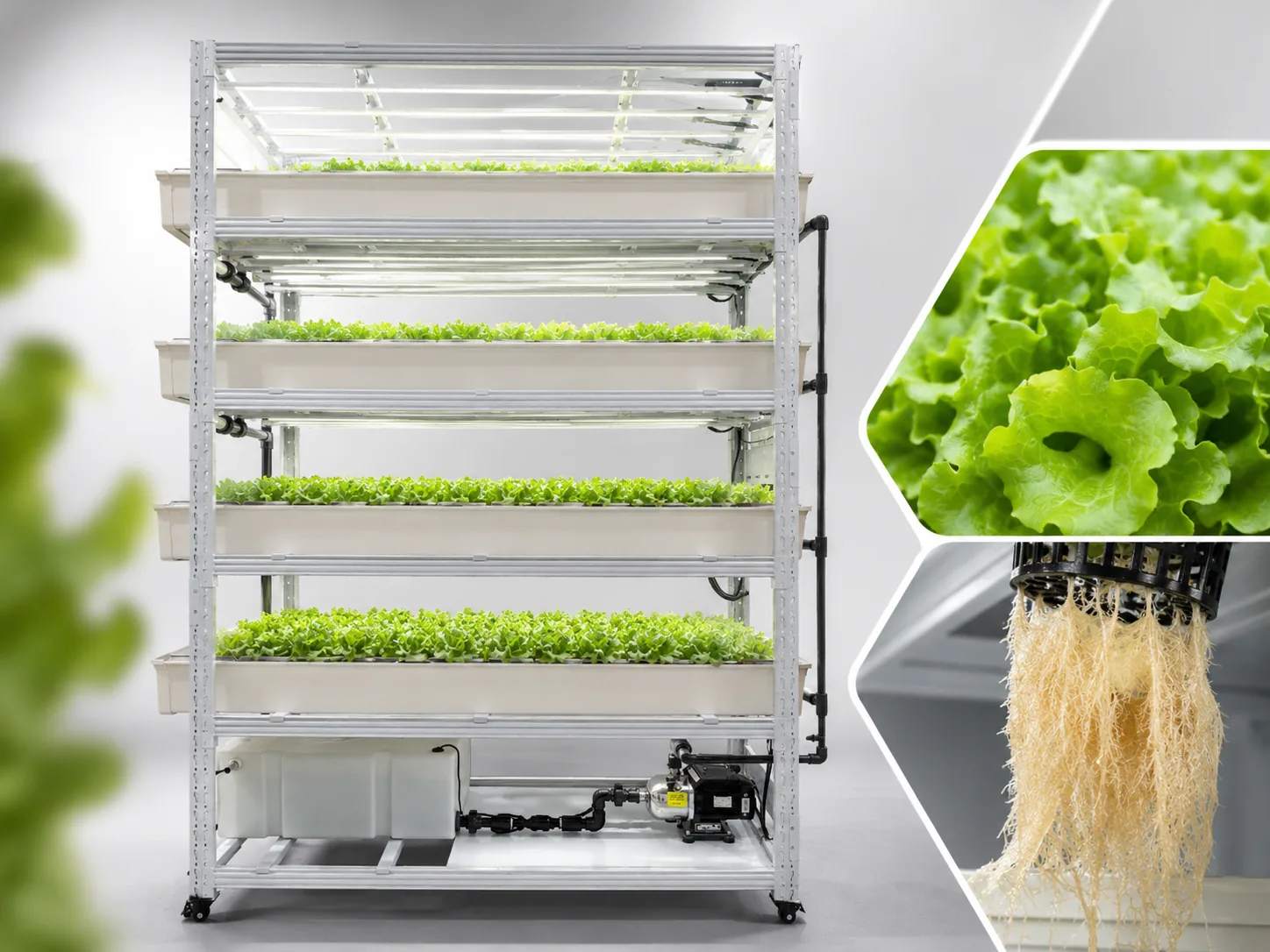
01The main difference is root-zone delivery
Hydroponic systems expose roots to nutrient solution through methods such as channels, rafts, drip irrigation or substrate. Aeroponic systems keep more of the root zone in air and deliver water and nutrients through mist or spray.
02Crop architecture matters
Propagation, short-cycle leafy crops, fruiting crops and tall plants do not all require the same root-zone geometry. Selection should start with plant spacing, root volume, crop support, harvest method and production cycle.
03Aeroponics depends on reliable spray delivery
Nozzle condition, pressure, filtration, irrigation timing and root-zone access become important operating considerations. Maintenance and water management are therefore part of the system design.
04Hydroponics includes several different methods
A recirculating channel system has different operating characteristics from substrate drip irrigation or deep-water culture. Broad comparisons should therefore be treated carefully.
05Choose around the complete workflow
Compare cleaning, crop changeover, nutrient control, access, redundancy, operator skill and downstream transplant or harvest workflow. GROWSPEC uses crop-specific architecture rather than treating one method as universally better.