
Design around the handover point
Plan propagation backward from the transplant requirement. Define target plant age, root condition, canopy size and batch quantity required by the downstream production area.
Propagation performance is not only about germination. The operational goal is a repeatable handover of uniform young plants into the next production stage.
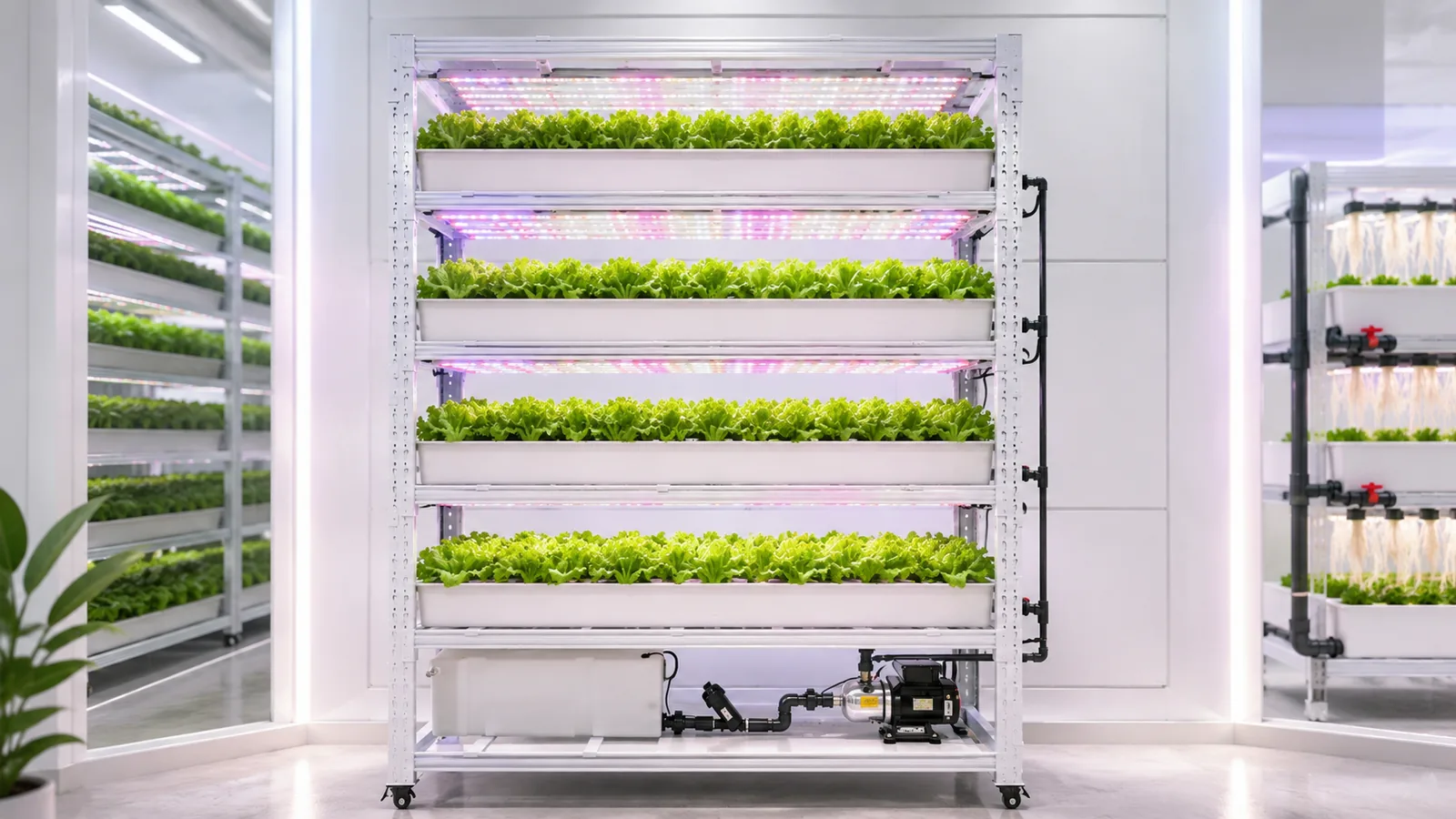
Plan propagation backward from the transplant requirement. Define target plant age, root condition, canopy size and batch quantity required by the downstream production area.
Uniform sowing, moisture, temperature, lighting and irrigation help trays reach the transplant window together. Mixed development stages make labour and production scheduling harder to control.
Root access, oxygenation, moisture delivery, nutrient concentration and hygiene influence early-stage consistency. The system should make inspection and routine maintenance practical.
Seedling, microgreens and young leafy-green stages can require different tray density and canopy spacing. Lighting should support the intended stage rather than simply maximizing intensity.
The propagation area should supply the main production farm at the required batch frequency. Too little capacity creates empty production positions; too much can create holding time and uneven transplant age.
Share the crop, location, available space, utilities, output target and timeline for a focused system review.